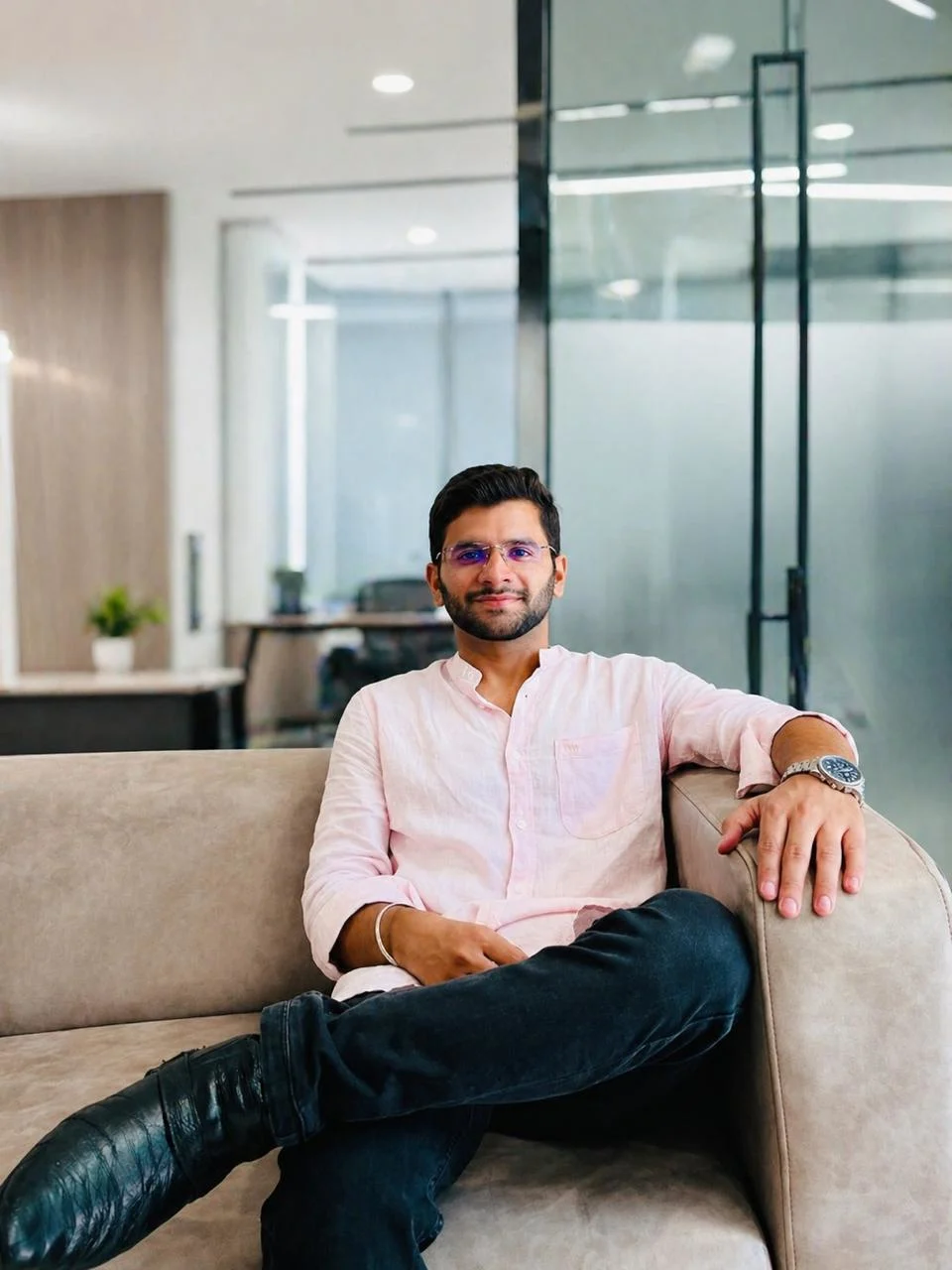
I run a private pool villa in Udaipur. I've operated through managed hospitality platforms and independently. The difference in per-booking profitability between an OTA booking and a direct booking is not subtle — it's the difference between a sustainable business and a treadmill. This guide is written from that experience, cross-referenced with the data on what's working across the Indian villa and homestay market in 2026.
In This Article
- The Real Cost of OTA Dependence — The Maths
- OTA Commission Rates in India — 2026 Breakdown
- The Direct Booking Strategy: 5 Channels That Work
- Channel 1: Google Business Profile — The #1 Free Opportunity
- Channel 2: Instagram — Where Guests Discover Villas
- Channel 3: WhatsApp — Your Direct Rebooking Engine
- Channel 4: Your Own Website — The Asset You Own
- Channel 5: Meta Ads — For Strategic Campaigns
- The 60/40 Target: How to Shift the OTA Ratio
- FAQs
The Real Cost of OTA Dependence — The Maths
Before we discuss solutions, let's do the maths most villa owners haven't done. The India vacation rental market was valued at $3.45 billion in 2025 and is growing at 19.2% CAGR. (Source: Market Research Future, 2026) The India homestay market specifically reached $1.19 billion in 2024 and is projected to nearly quadruple to $3.92 billion by 2033. (Source: Deep Market Insights, 2026) This is a market growing fast — and OTAs are capturing 15–25% of every transaction within it.
The ₹3.4 lakh difference is real. For properties with higher ADR (average daily rate) or multiple units, the number is ₹5–8 lakh or more. Indian homestay owners pay an estimated ₹3–8 lakh per year in OTA commissions. (Source: MyHomestay.io, 2026) That commission isn't the cost of marketing — it's the cost of not having your own marketing channel.
Commission is only the visible cost. The hidden costs are equally damaging: rate parity clauses that prevent you from offering lower prices on your own website, payment delays of 15–45 days after guest checkout, loss of guest contact data (the OTA owns the relationship, not you), and algorithmic control — your ranking on the platform can drop for reasons you can't see or control. The Competition Commission of India fined MakeMyTrip ₹223 crore in 2022 for anti-competitive pricing practices, signalling that this model is under regulatory scrutiny. (Source: Wikipedia / CCI, 2022)
OTA Commission Rates in India — 2026 Breakdown
| Platform | Commission Rate | Fee Model | Payment Cycle |
|---|---|---|---|
| Booking.com | 15–20% | % of booking value | Monthly invoice after checkout |
| MakeMyTrip / Goibibo | 18–25% | % of booking, higher for preferred placement | Settlement after guest checkout |
| Airbnb | 15.5% (host-only) or 3% host + 14% guest | Host-only fee is default since late 2025 | 24 hours after check-in |
| Agoda | 15–22% | % of booking value | Long payment cycles common for Indian properties |
| Expedia / Vrbo | 15–20% | % of booking value | Varies by property type and region |
| OYO | 20–30% | Deep discounting concerns; OYO often sets prices | Variable; loss of brand identity risk |
(Sources: MyHomestay.io, Cloudbeds, Smart Order, Homeyhuts, 2026)
Note that higher visibility placements on most OTAs carry additional commission — 3–5% more for "preferred partner" or "genius" programmes. This means your effective commission can exceed 25% for the bookings that are supposedly helping you the most. (Source: Online Hotelier, 2025)
The Direct Booking Strategy: 5 Channels That Work
The goal is not to leave OTAs entirely — that would sacrifice discovery. The goal is to use OTAs for what they're good at (first-time guest discovery) and build direct channels that capture repeat bookings and brand-name searches at zero commission. A healthy target: 40–50% direct bookings within 12–18 months.
Channel 1: Google Business Profile — The #1 Free Opportunity
When someone searches your property name after seeing it on Airbnb or MakeMyTrip, Google is where they land. If your GBP is fully optimised with photos, reviews, a booking link, and accurate details — that guest can book direct instead of going back to the OTA. This is the "billboard effect" in reverse: the OTA creates awareness, Google captures the conversion, and you keep 100% of the revenue.
Villa/Homestay GBP Essentials:
- Category — Choose "Villa" or "Vacation Rental" or "Homestay", not "Hotel". The specific category determines which searches you appear in.
- 100+ photos — Every room, the pool, outdoor spaces, food, sunset views, local surroundings. Properties with 100+ GBP photos get dramatically more profile views.
- Booking link — Add your WhatsApp link or direct booking URL as the booking action. This is the conversion point.
- Review collection — Actively request reviews from every guest. A villa with 80+ Google reviews at 4.7+ stars owns the local search results for its category.
- Weekly Google Posts — Seasonal offers, new amenities, guest photos (with permission), local events. Weekly activity is a ranking signal.
Channel 2: Instagram — Where Guests Discover Villas
Villas and homestays are inherently visual products — a pool at sunset, a mountain view from the balcony, a traditional breakfast spread. Instagram is built for exactly this content. A consistent Instagram presence does three things: builds aspiration (people save your posts for future trips), creates social proof (guest photos, stories, testimonials), and drives direct enquiries via DMs and the bio link.
Content formula for villas and homestays:
- 3 Reels per week — Property walkthrough, sunrise/sunset time-lapse, behind-the-scenes (preparation for guests, cooking breakfast, setting up the pool). Reels get shown to non-followers and drive discovery.
- 2 Stories per day — Daily life at the property, guest arrivals (with permission), local area highlights, weather updates. Stories keep your property top-of-mind for followers.
- 1 carousel per week — "5 reasons to book [your property] this monsoon", "What guests say about [property]", photo grid of different rooms and views. Carousels get saved, which is the highest-intent Instagram action.
- Guest content reposts — When guests tag your property, repost it. This is the most authentic marketing asset you have — real people having a real experience at your property.
Your Instagram bio should contain: property name, location, "Book direct: [WhatsApp link]", and a Linktree or direct URL to your booking page. Every post caption should end with a CTA: "DM us to book" or "Link in bio for availability."
Channel 3: WhatsApp — Your Direct Rebooking Engine
WhatsApp is the single most underused direct booking channel for Indian hospitality properties. Every guest who stays at your property gives you their phone number — through the booking, at check-in, or for coordination during their stay. That phone number is a direct marketing channel with 85–90% open rates. The mistake most villa owners make: they collect the number and never use it again.
The WhatsApp direct booking system:
- At checkout — "We'd love to have you back. Can I add you to our WhatsApp list? We share seasonal offers and availability updates — direct guests get 10% off their next stay."
- Monthly broadcast — One message per month with a seasonal offer, new photos, or availability update. "Long weekends coming up — we still have [dates] open. DM to book direct and save 15%."
- Festival/holiday campaigns — 2 weeks before Diwali, Christmas, Holi, summer holidays: "Planning a [festival] getaway? We're offering [deal] for direct bookings. Only [X] dates left."
- Referral programme — "Refer a friend who books, and both of you get 10% off your next stay." Word of mouth is the original direct booking channel — WhatsApp makes it measurable.
A villa with a WhatsApp list of 300+ past guests sending monthly offers can generate 15–25% of annual bookings through this single channel at effectively zero cost. Those bookings carry zero commission.
Channel 4: Your Own Website — The Asset You Own
Your own website is the one digital channel you fully control. OTAs can change their algorithm, raise commission, or delist your property at any time. Your website cannot be taken away from you.
A direct booking website for a villa or homestay doesn't need to be complex. It needs: stunning property photos (the same ones performing well on Instagram), clear room/villa descriptions, a real-time availability calendar or booking widget, transparent pricing, a WhatsApp booking button, guest reviews/testimonials, and an About section that tells your story. The technology exists to build this affordably: white-label booking widgets can embed instant UPI collections and verified reviews directly on your site. (Source: Mordor Intelligence, 2026)
Rate parity workaround: You cannot advertise lower prices than OTAs due to rate parity clauses. But you can offer exclusive value-adds on your direct channel — a complimentary breakfast, late checkout, welcome hamper, airport pickup, or a "direct guest loyalty" discount on the next stay. The price is technically the same; the value is better. Guests understand this immediately.
Channel 5: Meta Ads — For Strategic Campaigns
Meta Ads are not an always-on channel for villas — they're a strategic weapon for specific moments. Running a ₹5,000–15,000 Meta campaign before a long weekend, festival season, or during your low-occupancy months delivers targeted awareness to people planning a trip, at a fraction of what you'd pay in OTA commission for the same bookings.
Campaign types that work for villas/homestays:
- Long weekend push — Target families and couples within your primary feeder markets (for Udaipur: Gujarat, Mumbai, Delhi). Run 7 days before the weekend. Budget: ₹3,000–8,000.
- Monsoon/off-season offer — Target deal-seekers with a specific discount or package. "Monsoon special: ₹7,500/night including breakfast + bonfire." Budget: ₹5,000–10,000.
- Retargeting website visitors — Anyone who visited your website or Instagram but didn't book. Show them a carousel of your best photos with a "Still thinking about [Property Name]? Book direct for [benefit]." Budget: ₹2,000–5,000/month.
Always run to WhatsApp or your direct booking page — never to the OTA listing. The entire point is capturing the booking on your own channel.
The 60/40 Target: How to Shift the OTA Ratio
The realistic goal isn't 100% direct — it's shifting the ratio. Here's a 12-month timeline for a villa or homestay starting from 90%+ OTA dependence:
| Phase | Timeline | Actions | Target Ratio |
|---|---|---|---|
| Foundation | Month 1–2 | GBP setup + optimisation, Instagram started, WhatsApp list building begins, basic website live | 85% OTA / 15% direct |
| Traction | Month 3–6 | Consistent Instagram (4×/week), weekly Google Posts, monthly WhatsApp broadcasts, first Meta Ad campaign | 70% OTA / 30% direct |
| Shift | Month 6–12 | GBP reviews growing, Instagram followers 2,000+, WhatsApp list 200+, website ranking for property name, repeat guests booking direct | 55–60% OTA / 40–45% direct |
| Mature | Year 2+ | Referral programme active, seasonal Meta campaigns, email/WhatsApp nurturing, GBP top 3 for category keywords | 50% OTA / 50% direct |
Direct booking channels compound. Every Google review makes your GBP stronger. Every Instagram follower is a future booking. Every WhatsApp contact is a repeat guest who will never pay OTA commission again. Every direct guest who refers a friend generates another commission-free booking. The villa that starts building these channels today is 12 months ahead of the one that starts next year — and the gap gets wider every month.
Want More Direct Bookings for Your Villa or Homestay?
ENZO Digital helps hospitality properties across India build direct booking channels — GBP optimisation, Instagram strategy, WhatsApp systems, website builds, and Meta Ads for seasonal campaigns. We understand hospitality from the inside.
Get Your Free Hospitality Audit →Frequently Asked Questions